
UT Southwestern

Redesign
Project
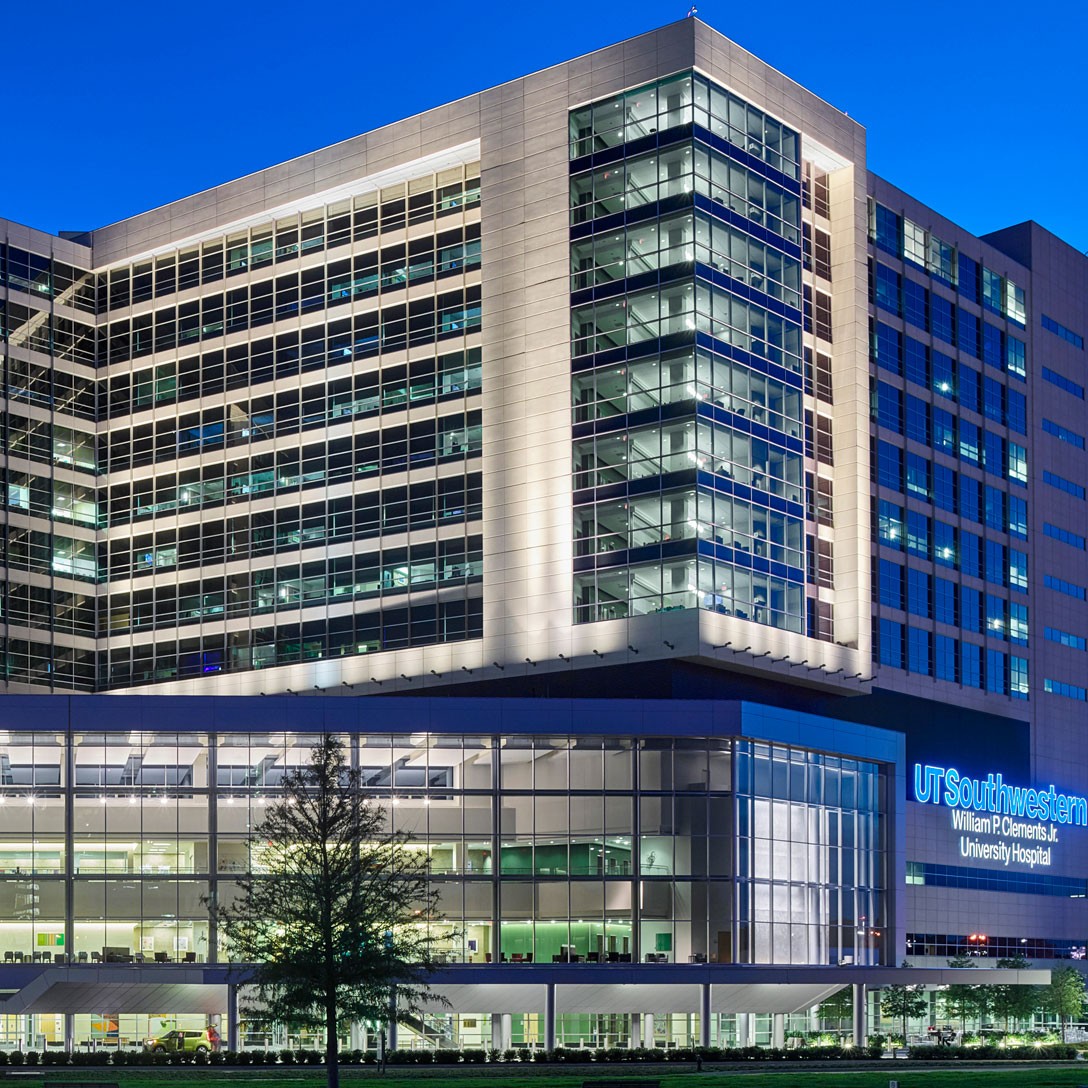
The UT Southwestern .edu and .org websites provide information and resources for education, research, and healthcare services, catering to students, faculty, and patients.
About this Project
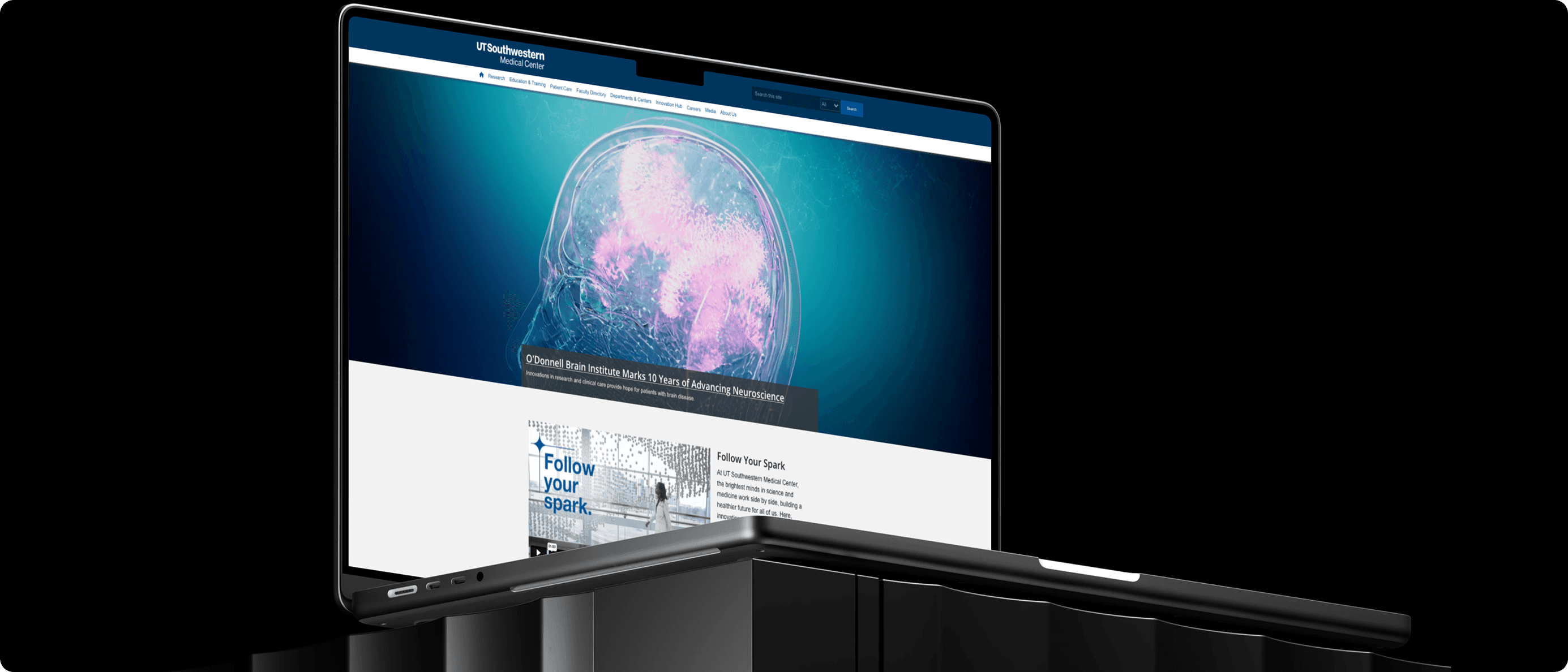
The UT Southwestern project focused on enhancing the usability and visual design of the institution’s .edu and .org websites to improve the experience for students, faculty, and patients. The objective was to modernize the digital presence by establishing a cohesive style guide and optimizing page layouts to improve navigation, accessibility, and overall usability.
I contributed by creating low- and high-fidelity wireframes, facilitating design sprints, and collaborating closely with cross-functional stakeholders to ensure solutions aligned with both user needs and institutional goals. The outcome was a more intuitive, accessible, and visually consistent web experience across UT Southwestern’s platforms.
Website Design, Redesign
May 2022 - Present
My Goal
The goal of the UT Southwestern website redesign was to deliver a cleaner, more intuitive, and accessible experience for students, faculty, and patients. The redesign prioritized improved navigation, clearer content hierarchy, and consistency across pages through a unified style guide and reusable components. Overall, the initiative aimed to create a more usable, visually engaging, and brand-aligned digital experience that supports UT Southwestern’s evolving needs.
My Role
In the UT Southwestern redesign, I contributed to the UX process from research through final design. I conducted user research to identify pain points and navigation challenges, translating these insights into sketches and low-fidelity wireframes. I then developed high-fidelity prototypes in Figma to visualize the updated layouts and gather stakeholder feedback. Throughout the project, I iteratively refined designs to ensure the final experience was intuitive, accessible, and fully aligned with the project’s objectives.
Project Information
Project Overview
UT Southwestern undertook a comprehensive redesign of its .edu and .org websites to elevate the user experience, modernize the visual design, and enhance accessibility for diverse audiences. The project aimed to streamline navigation, establish a cohesive design system, and improve overall usability for students, faculty, and patients seeking information, resources, and services.
Problem Statement
The existing UT Southwestern websites were outdated, challenging to navigate, and lacked full compliance with modern accessibility standards. User feedback highlighted difficulties in locating critical information, inconsistencies in design across pages, and limited mobile responsiveness—all of which hindered usability and negatively impacted engagement.
Solution Design
The solution design centered on understanding user needs through interviews and usability testing with students, faculty, and patients. Research revealed difficulties in finding resources due to poor navigation, inconsistent page layouts, and challenges for mobile users caused by unoptimized designs. Key pain points included unclear information architecture, inconsistent branding, limited mobile responsiveness, and insufficient accessibility features for users with disabilities.
Design Process
Design Strategy
Qualitative Research
Form
Responses
Gender
Google Survey
20
Male and Female
Qualitative Research
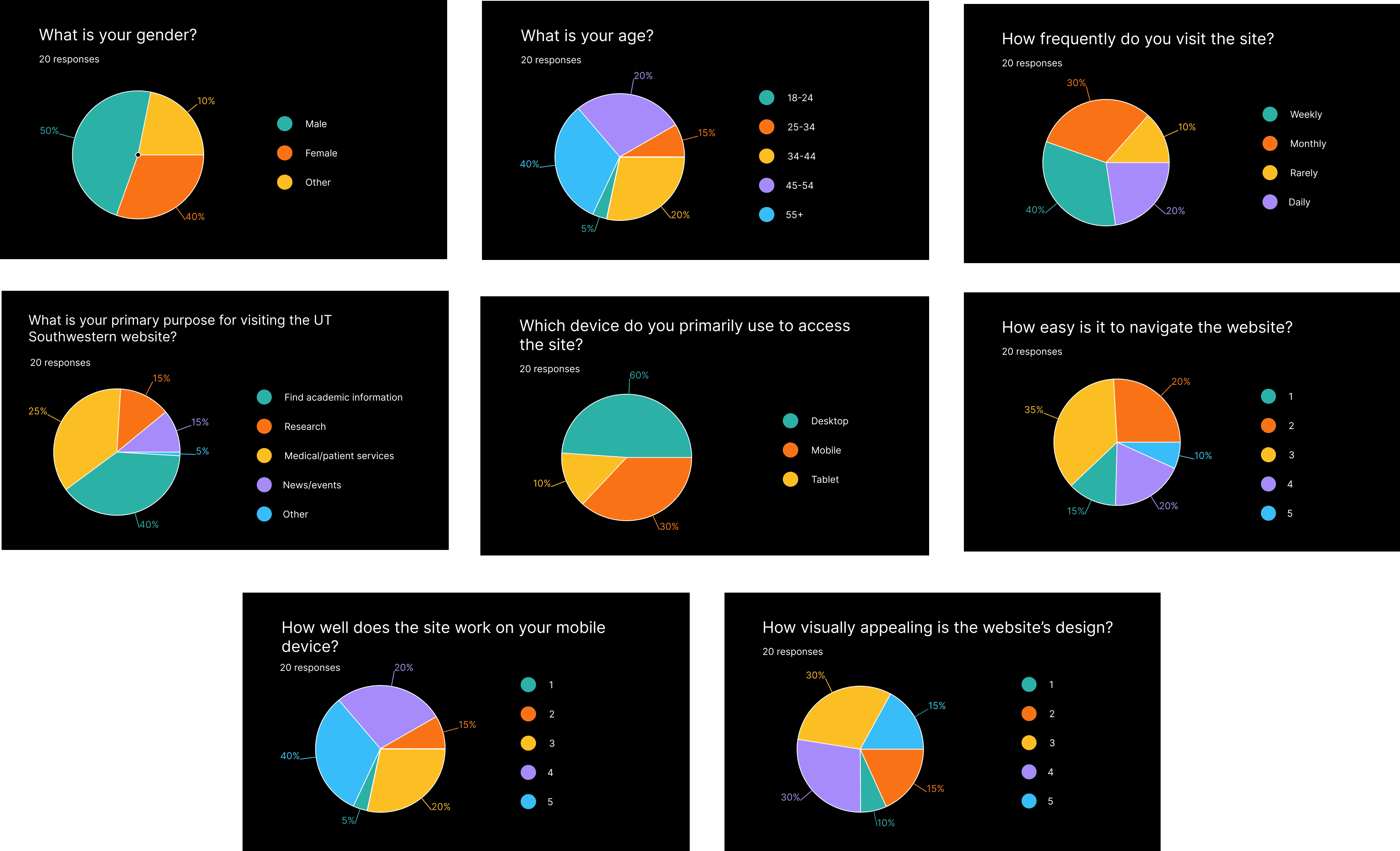
We were able to interview 20 users, spanning from students, administrative staff, medical patients and faculty.
User Needs
Users needed a streamlined, intuitive way to access academic programs, health services, department directories, and contact information. They also emphasized the need for consistent layouts, fast load times, and mobile-friendly interfaces.
Pain Points
Cluttered menus and redundant links
Inconsistent branding and layout template
Poor mobile experience
Difficulty finding key information
Lack of accessibility features for users with disabilities
Solutions
Developed streamlined navigation and sitemap
Designed mobile-responsive and accessible templatestent branding and layout template
Created high-contrast UI and screen-reader compatibility
Introduced reusable components for fast development and consistent branding
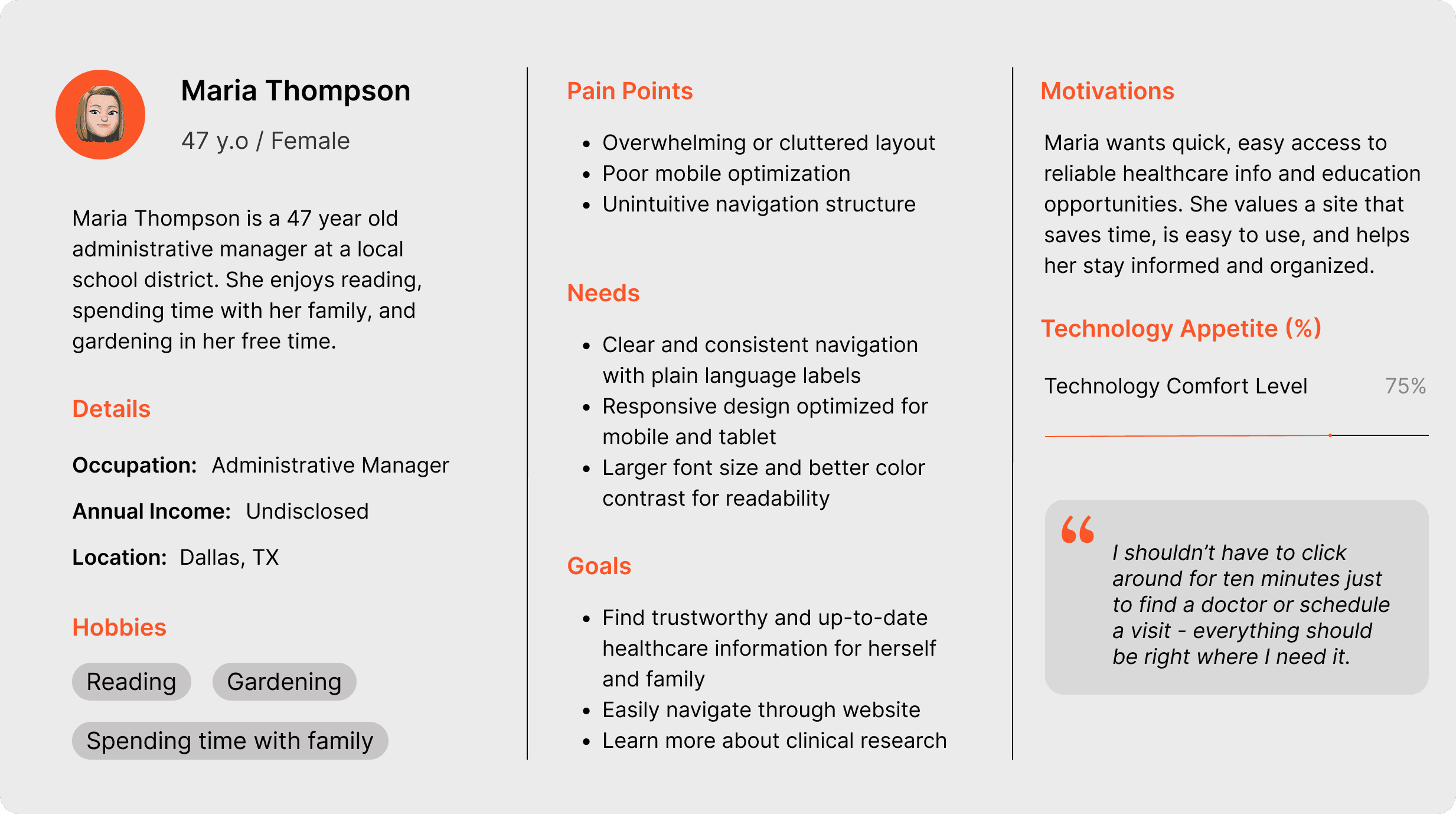
User Persona
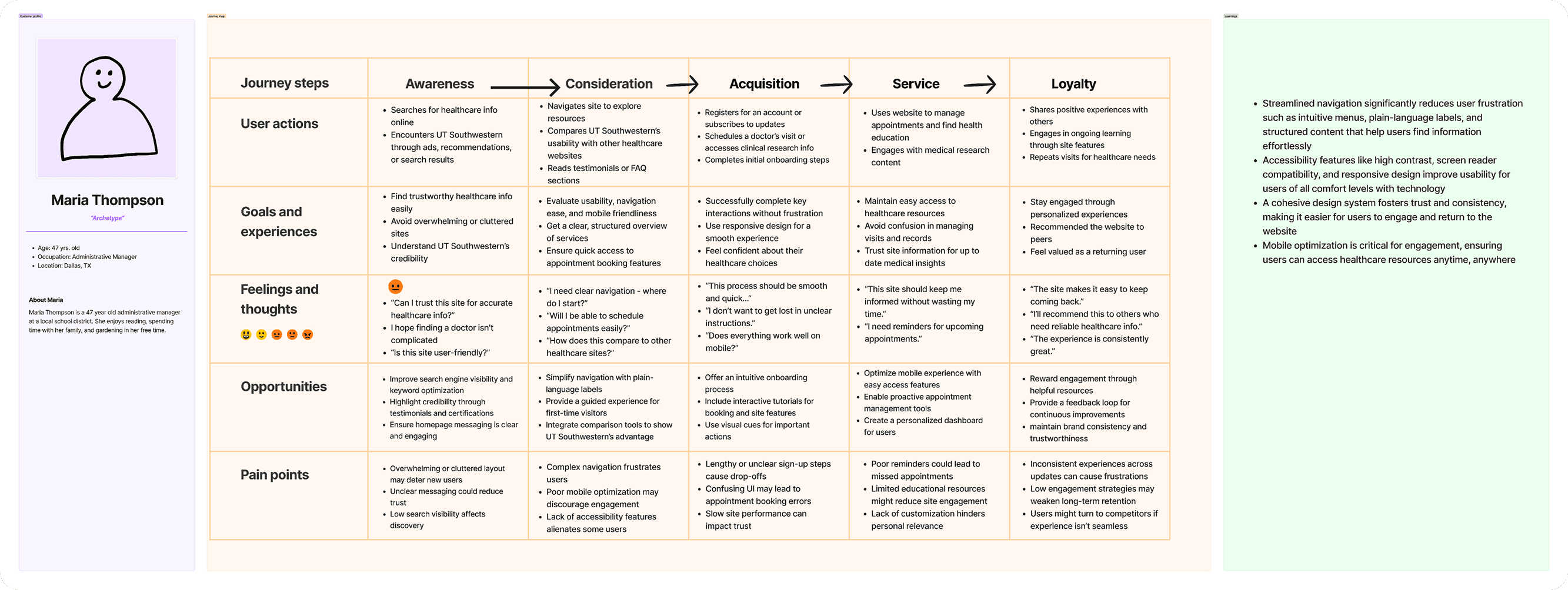
Customer Journey Map
AI Integration in Design Workflow

ChatGPT
Summarized user research insights and stakeholder interviews
Generated clear, user-friendly microscopy for UI components
Converted complex medical and academic content into accessibility language

Claude
Explored different user flows and navigation approaches before wireframing
Generated alternative layout and content ideas to compare different directions
Took the strongest concepts into Figma for wireframing and refinement

Cursor AI
Translated Figma designs into HTML/CSS more efficiently
Used AI to refine responsive layouts and interactions
Helped maintain consistency across reusable components
Accessibility Considerations
Accessibility was a core focus of the UT Southwestern redesign to ensure the website served all users, including those with disabilities. Following WCAG guidelines, I prioritized an inclusive experience by addressing color contrast, navigation, and semantic structure. High-contrast color schemes improve visibility for users with visual impairments, while semantic HTML and properly structured headings enhance compatibility with screen readers and provide a clear content hierarchy. Additionally, descriptive alt text for images and labels for form fields were implemented to improve usability and comprehension across the site.
Key Accessibility Actions Included
Implementing color contrast ratios that meet WCAG standards
Ensuring all interactive elements are accessible via keyboard
Using semantic HTML for screen reader support
Adding alt text for images and descriptive labels on forms
Designing clear typography and consistent layouts for readability
Avoiding flashing or moving elements that could trigger seizures or dizziness
Low-Fidelity Prototypes
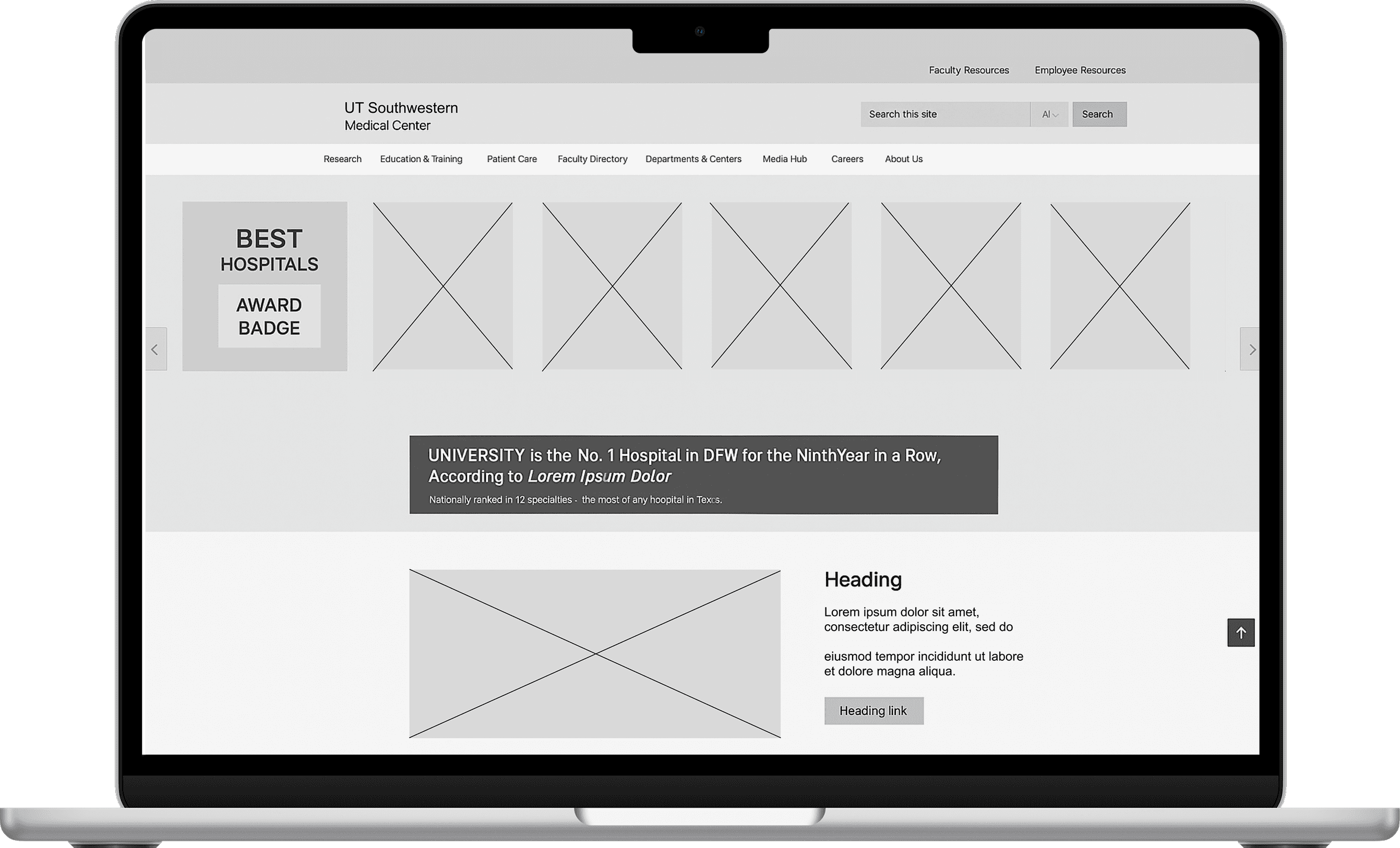
Created initial wireframes in Figma:
Streamlined Navigation: Designed a simplified menu structure to ensure users can easily find key information.
Consistent Layouts: Introduced standardized page templates to reduce confusion.
Accessibility Features: Added features such as screen reader compatibility and high-contrast mode.
High-Fidelity Prototypes
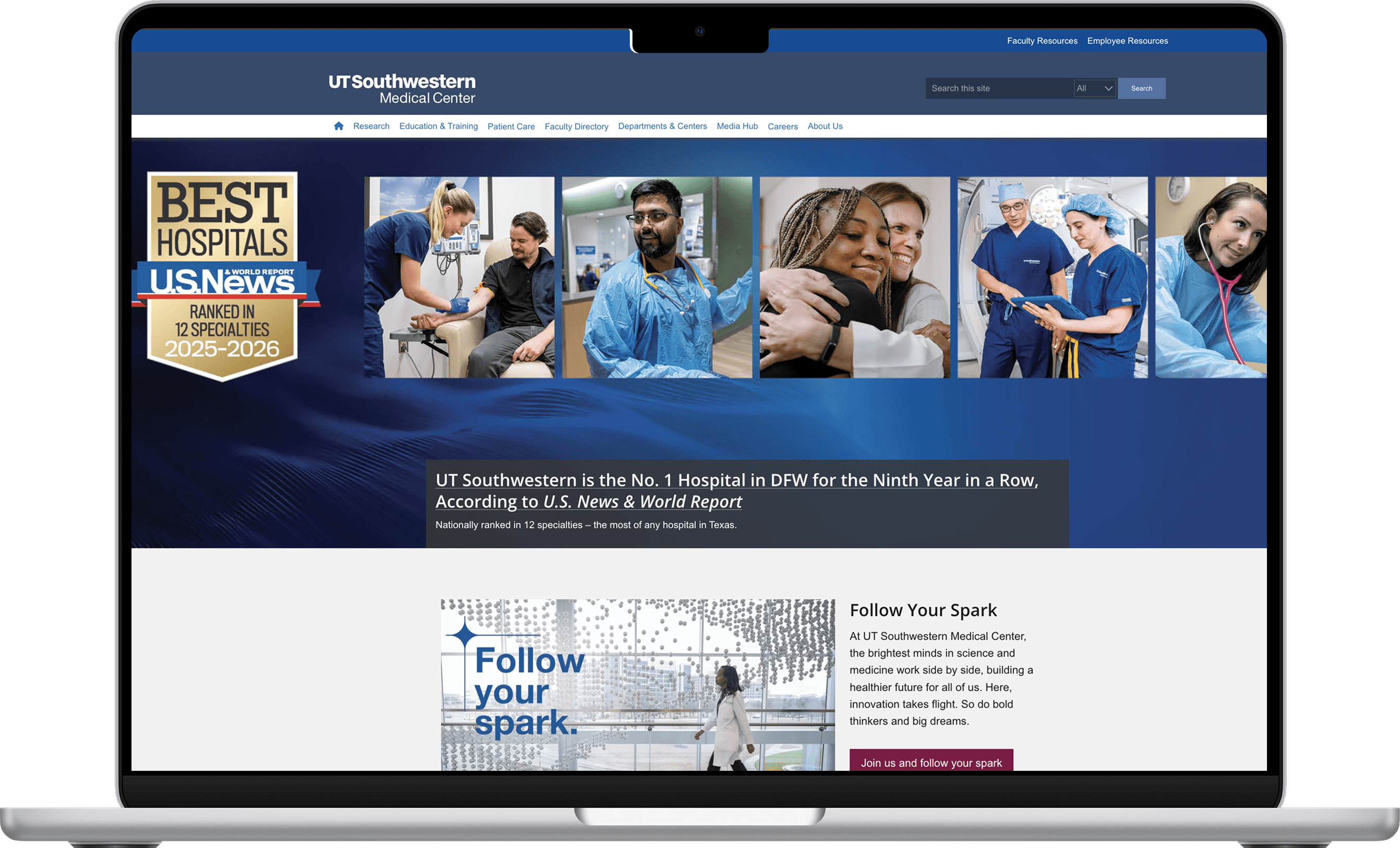
Based on feedback, I refined the designs into high-fidelity prototypes:
Visual Design: Ensured consistency with UT Southwestern’s branding, using modern typography and a clean layout.
Mobile Optimization: Designed responsive layouts for seamless user experience across devices.
Enhanced Functionality: Integrated dynamic search functionality and quick-access menus for frequently used resources.
Development Handoff & Implementation
I collaborated closely with developers to ensure a smooth transition from design to development. I created detailed design documentation and reusable components to maintain consistency across the experience. During implementation, I used Cursor AI to support design-to-code workflows, refine HTML/CSS, and troubleshoot front-end issues. Regular design reviews helped ensure the final experience stayed aligned with the design vision, accessibility standards, and user needs.
Results & Impact
25%
increase in user engagement due to intuitive navigation and modern design
30%
reduction in bounce rates as users found it easier to locate information
Improved
Accessibility Score
achieving WCAG compliance
Positive
Feedback
from students, faculty, and patients on the website’s usability and aesthetics
Conclusion
The UT Southwestern .edu and .org website redesign was a pivotal project that demonstrated the value of user-centered design. Through comprehensive research, iterative prototyping, and close collaboration with cross-functional teams, the project successfully met both user needs and business objectives. Key takeaways included the importance of ongoing user engagement to inform design decisions, iterative testing to refine solutions, and strong collaboration with developers to ensure seamless and accurate implementation.
(Project)
Next Project

Why clients love my work